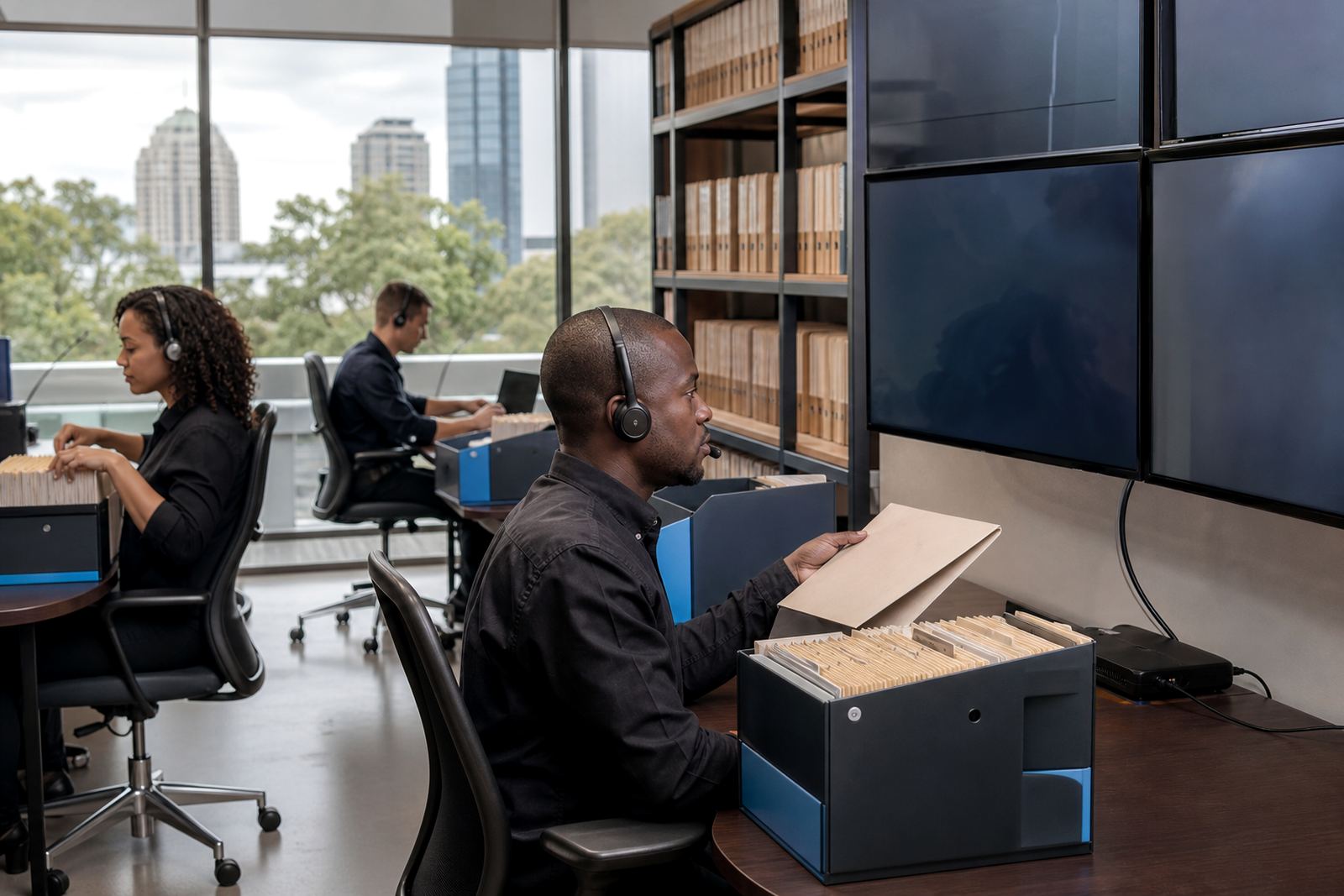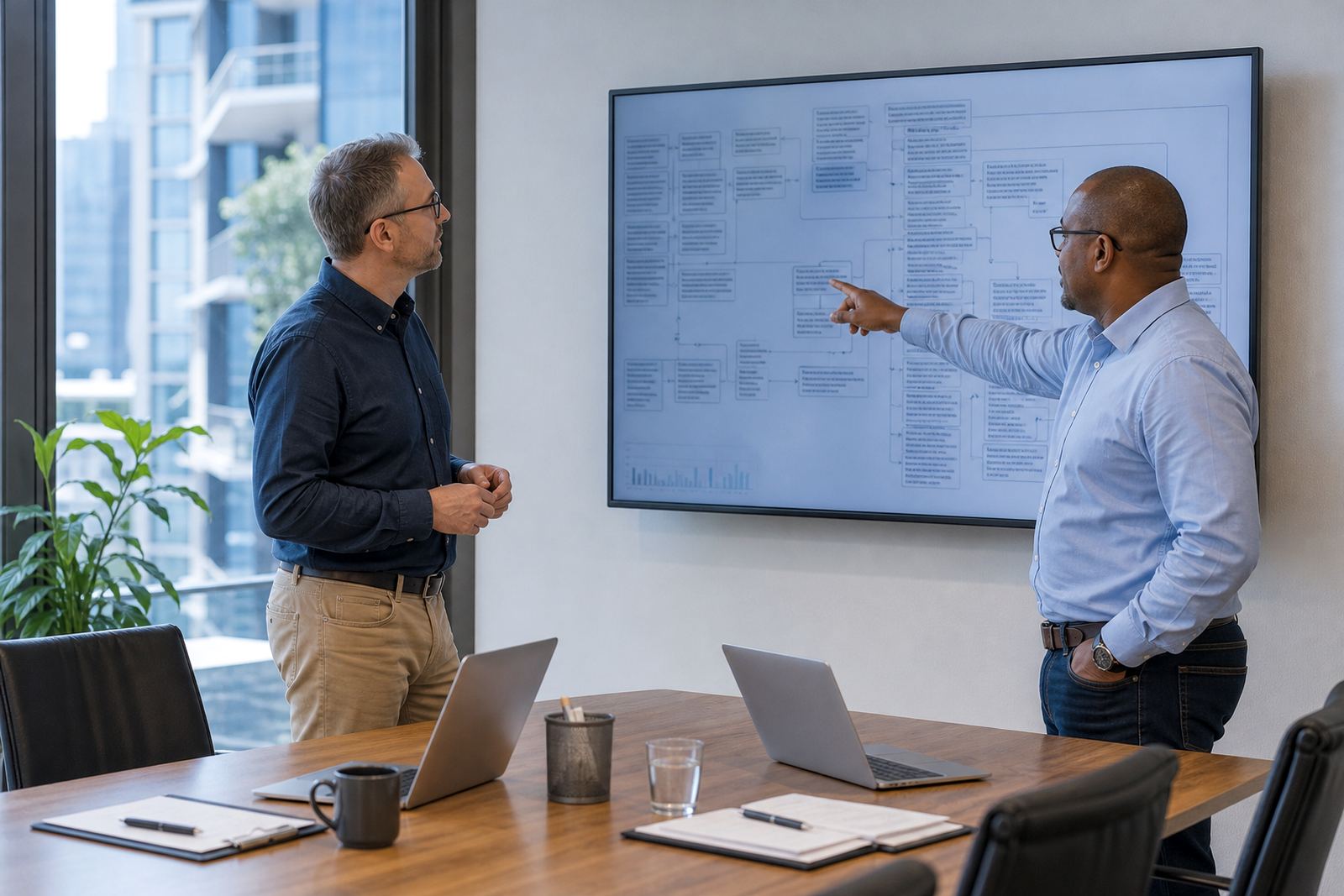


A collections counter that had outgrown shared folders
The brief came from a Bloemfontein practice handling debt recovery work across a steady volume of matters. Their team had useful templates, but they were spread across shared drives, version names were inconsistent and follow-up notes sat in different places depending on who opened the file that morning.
The firm wanted demand packs that could be prepared in a repeatable way, then moved into a queue where each matter showed its next step, due date and status. They also needed a structure that could support junior staff without forcing senior attorneys to check every document line by line. The work had to stay practical for a South African collections counter, with naming rules, audit trails and controlled access from the start.
- Client type: collections practice in Bloemfontein
- Core need: queue-based follow-up and standard demand packs
- Operating pressure: high matter volume and tight tracking
- Risk point: duplicate templates and unstructured evidence storage
What had to be kept under control
The practice asked for a setup that would not add more admin than it removed. Their matters moved through a clear sequence, but the old process relied on memory, message threads and manual checking. That made it harder to see which files were waiting on instructions, which ones had draft correspondence pending, and which ones needed supporting documents before the next action.
We also had to respect access control. In a collections environment, not every team member should see every note or attachment, and certain folders need tighter permissions than others. The setup had to work with POPIA-aware handling in mind, with sensible controls around personal information and document visibility. No part of the design could assume a big IT team on standby either.
- Controlled access by role, not by guesswork
- Clear matter states for each follow-up stage
- Template fields that reduce manual retyping
- Searchable evidence linked to the right matter
Templates, queues and evidence in one working flow
We supplied a practical build around three linked parts: document assembly, matter tracking and evidence handling. Standard demand packs were broken into reusable template blocks so the team could generate letters with the correct party names, amounts, dates and matter references without rebuilding the whole document each time.
On the workflow side, matters were grouped into queues that reflected the firm’s real sequence of work. Follow-up items could be assigned, checked and moved on in a way that made the next action obvious. Evidence imports were set up so statements, correspondence and supporting files sat with the matter they belonged to, rather than drifting through a general folder structure. The result was calmer day-to-day handling, less hunting for files and less rework when a matter changed hands.
- Standard demand pack templates with field-driven assembly
- Queue view for follow-up, review and escalation stages
- Evidence imports matched to matter records
- Permission settings for staff roles and supervisors
Build work across five weeks
The implementation ran over five weeks. The first week covered process mapping, template review and the structure of the matter queues. The second week focused on the main demand pack build and the naming logic for files, fields and states. By the third week, we had the migration plan for active matters and supporting evidence, including the clean-up of old labels that made search harder than it needed to be.
The fourth week was spent on permissions, user training and testing with real matter examples from the practice. The final week covered go-live support, fine-tuning and checking that the queue logic matched how the team actually moved files. That final stretch mattered because collections work does not sit still for long, and the system had to reflect the pressure of live matters rather than an idealised version of them.
What changed after the setup settled
Once the new workflow was in place, the team had a clearer view of what sat where and what needed action next. Demand packs were assembled in a more consistent way, which helped reduce avoidable formatting fixes and missing fields. Staff could see matter status without opening a chain of separate folders and that made handovers less messy.
The practice also gained better discipline around evidence. Documents were attached to the correct matter more often, and review queues made it easier to see which items were waiting on a check, which were ready for action and which needed a follow-up step. For a busy Bloemfontein collections team, that kind of order matters more than flashy features.
- Cleaner document assembly for repeat demand work
- Better visibility across active matters
- Less duplication in evidence storage
- More consistent handover between staff members
What we would keep in the same shape
We would keep the build anchored to the firm’s actual matter flow, not to a generic legal template set. Collections work depends on sequence, so the queue structure had to match the way staff think about demands, responses, follow-ups and escalation. We would also keep the permission model tight from the start, because too many open folders create confusion and risk in a matter-heavy office.
Another point worth keeping is the separation between template logic and evidence storage. That split made the system easier to maintain and easier for new staff to learn. If the practice grows into more branches or takes on more matter types, the same structure can be extended without forcing everyone back into scattered drives and ad hoc naming. It keeps the office moving without turning the file trail into a puzzle.
- Keep the queue stages tied to live collections work
- Keep template blocks separate from evidence storage
- Keep role-based permissions strict and readable
- Keep file naming rules short and consistent
Key facts
| Project | Bloem Debt Workflow |
|---|---|
| Client type | Collections practice |
| Town | Bloemfontein |
| Build scope | Document assembly, matter management, evidence handling |
| Timeline | 5 weeks |
| Delivery focus | Queue-based follow-up and standard demand packs |