

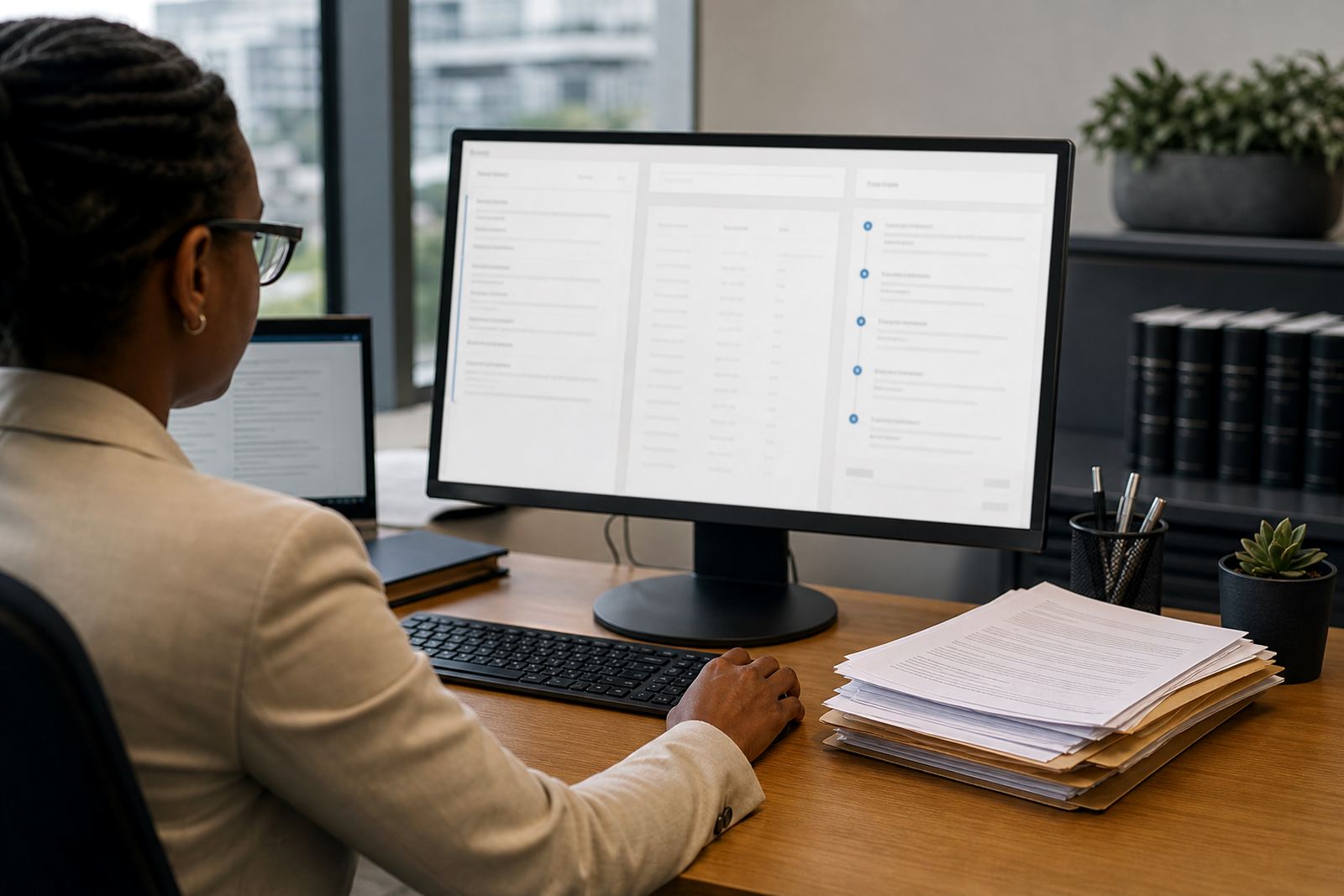
Repeated labour work needs one clear path
Most labour files do not sit still. A dismissal dispute, grievance, incapacity matter or bargaining issue tends to move through the same broad stages: intake, documents, deadlines, consultation notes, evidence, hearing preparation and outcome follow up. The problem starts when each matter is handled in a different way by different people. One matter lives in message, another in a shared drive, and the third is tracked on a spreadsheet that nobody updates after Friday afternoon.
A better approach is to use the same matter structure every time. That does not mean every file is identical. It means the team always knows where to put the next note, which date matters next, and which documents must be easy to find. For South African firms with several employment disputes on the go, that consistency matters more than clever features.
Stages that belong in every labour file
Labour matter tracking works best when the stages are practical rather than dramatic. A good system should let the team capture each step without turning the file into admin theatre. In Sandton, where a firm may handle employer instructions from the CBD, Midrand and the East Rand in the same week, the same matter rules need to hold up under pressure.
- New instruction received and matter opened
- Key dates entered, including referrals and hearing dates
- Important documents uploaded and labelled clearly
- Witness notes, chronology and correspondence saved in one place
- Drafts reviewed before filing or sending
- Outcome recorded with any follow up actions
When those stages are visible, the team does not need to guess where a matter stands. That helps attorneys, paralegals and ops staff work from the same page, even if they sit in different offices or work on different parts of the process.
Template structure keeps the volume under control
Labour disputes often generate familiar documents, so template structure is one of the biggest time savers in the process. Templates should not be stiff or hard to change. They should be firm enough to guide the drafter and flexible enough to handle the facts of a real matter. A good template library can cover notices, internal summaries, hearing packs, letters, checklists and standard file notes.
That is where document assembly helps. Instead of retyping the same names, dates and matter details, the team fills in the core facts once and the system carries them into the right sections. For recurring labour work, that reduces copy errors and keeps the wording steadier across the file. It also makes it easier to spot when a required field has been missed, which is often where delays start.
Our work with South African firms usually favours small steps over big jumps. Start with the forms that are used most often, then add the rest once the team is comfortable. That keeps the process manageable and avoids clutter.
Evidence queues are cleaner than open folders
Labour files can collect a lot of supporting material: signed documents, attendance records, correspondence, screenshots, audio notes, minutes and internal instructions. If all of it lands in a general folder, finding the right item during preparation becomes slower than it should be. A searchable evidence queue gives the file a cleaner shape.
That queue should support labelling by matter, date, document type and status. It should also show what has been reviewed, what still needs checking, and what belongs in the final pack. This is useful for e-discovery style review as well, where teams need to sift through large volumes without losing track of relevance.
- Keep uploaded items tied to the matter number
- Use simple naming rules for versions and final copies
- Separate working notes from file-ready documents
- Limit access to sensitive labour records
- Keep an audit trail for who viewed or changed a file
That last point matters for POPIA-minded handling of personal information. Labour matters often include sensitive employee details, so access control should be deliberate, not left to habit.
Deadlines need one source of truth
Deadline management in labour work can become messy very quickly. Dates may come from correspondence, referral papers, hearing notices, internal follow up tasks and client instructions. If each person keeps a private list, the file starts to drift. A central matter pipeline gives the team one source of truth for the dates that matter.
That pipeline should show what stage the matter is in, who owns the next action and which dates are coming up. It should also make it easy to move a matter forward without re-entering the same facts at every step. For a firm handling labour work in Pretoria, Cape Town or Bloemfontein, that sort of visibility helps when multiple matters are active at once and each one carries a different level of urgency.
Plain language helps as well. A stage named "awaiting documents" tells a legal team more than a stage named "in progress" because it shows what is actually missing. That sort of clarity saves time later.
A Sandton example from a busy week
Picture a labour team in Sandton handling three matters at once: a grievance, a disciplinary review and a retrenchment related file. Each matter needs its own documents, deadlines and evidence set, but the office does not want three separate systems to manage them. One matter pipeline can carry all three, while templates and review queues keep the work organised.
The operations lead can check what is waiting for input, the product manager can adjust the template set, and the security engineer can keep permissions tight for sensitive records. Meanwhile the support coordinator can help the team sort imports and tidy up older folders. Nothing fancy, just a steadier way to move work through the office without losing the thread.
That kind of setup suits firms that handle labour matters across Johannesburg and nearby suburbs, where different people touch the same file at different times. The aim is not to make the process heavy. It is to make the next step obvious.
Keep the system useful after go live
Labour matter tracking only works if the process stays practical after the first week. If too many fields are required, people stop using them. If permissions are too open, sensitive records drift around the office. If templates are hard to edit, staff start saving private copies and the whole structure loses shape. The system should be reviewed often enough to stay useful, but not so often that the team feels like it is being reset every month.
A sensible upkeep routine usually includes:
- checking whether the stage list still matches real labour files
- reviewing template wording and removing old clauses or notes
- confirming access levels for active and archived matters
- cleaning duplicate documents and unused drafts
- testing whether search terms still find the right evidence quickly
For firms that want cleaner labour matter tracking without overcomplicating the office, that balance is the point. The software should stay out of the way when the work is steady, then give structure when a file gets busy or the deadlines pile up.