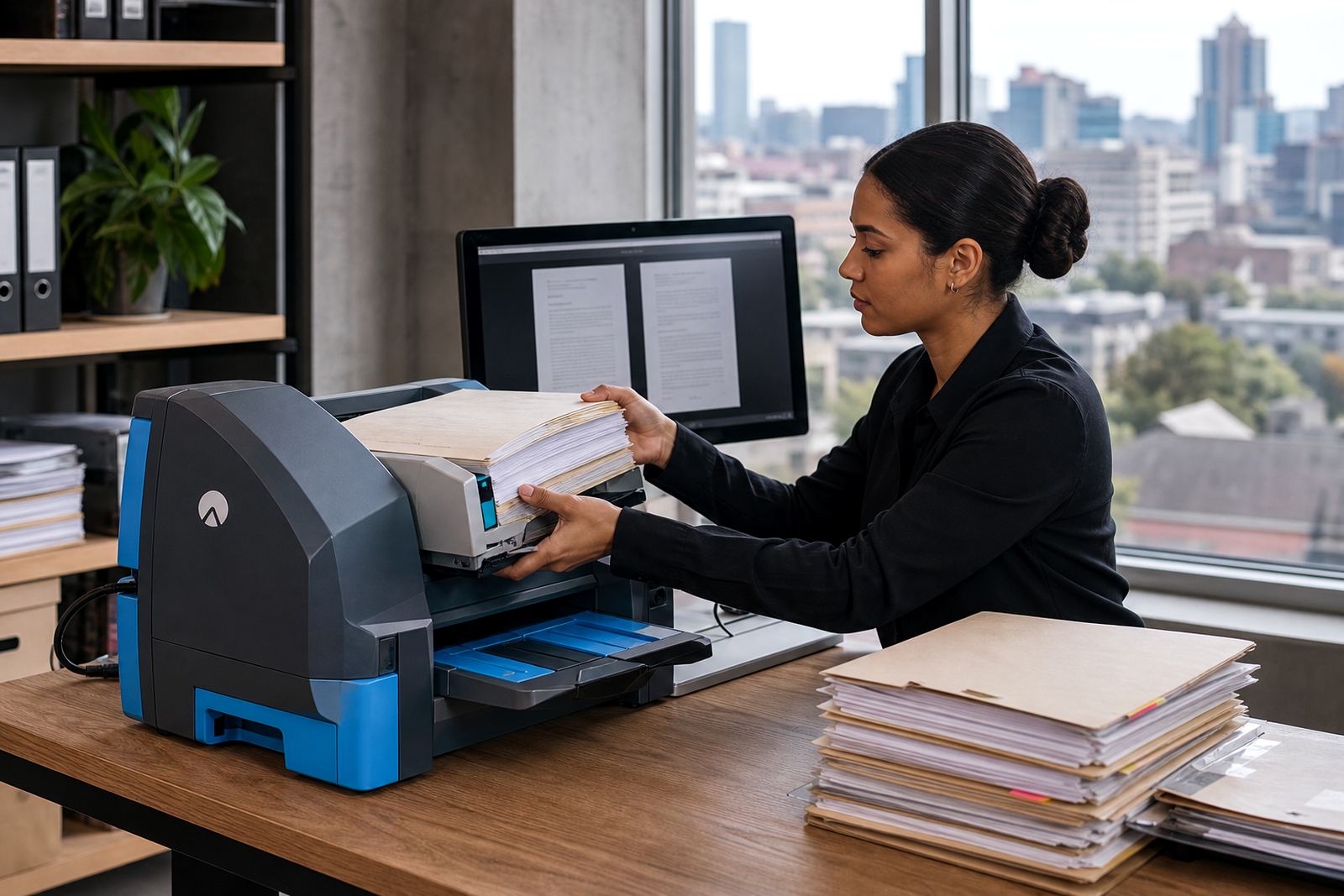


A Rosebank team with mixed office and remote routines
The firm worked across a Rosebank office and home setups, with attorneys, paralegals and support staff logging in from different places during the week. Matter notes, drafts and evidence were already in use, but they sat in too many folders and the access rules had grown uneven. Some users saw too much, others had to ask around for basic files, and that slowed the handover of active matters.
The brief was to tidy the structure without forcing a full reset of daily work. The client wanted document assembly that felt familiar, matter pipelines that matched the way matters move through a South African firm, and permissions that made sense for hybrid access. There was also a clear need to train new and existing users in a way that fitted real schedules, not a classroom plan that only works on paper.
What needed fixing before the first training session
The biggest issue was that the firm had outgrown its old filing habits. Templates were being copied by hand, matter names were inconsistent, and a few review steps depended on memory rather than a visible workflow. That made deadline tracking harder and created unnecessary back-and-forth when someone needed the latest version of a draft.
- Hybrid staff needed role-based access, not broad shared folders.
- Templates had to be standardised for common matter types.
- Evidence needed a searchable home, not a loose drive structure.
- Users wanted short, practical sessions instead of long theory blocks.
- The firm wanted POPIA-aware handling of client data and matter records.
We kept the scope tight. The aim was to improve control and clarity first, then layer in more advanced habits once the team had a working rhythm.
The onboarding build and the weekly rhythm
We worked through a four week onboarding plan. Week one covered implementation planning, existing data review and the structure for matters, folders and access groups. Week two focused on template builds and workflow configuration, with the firm’s core document sets mapped into practical assembly steps. Week three dealt with permissions setup, evidence imports and user training for the main team. Week four covered admin training, secure hosting setup and go live support so the office and remote users could settle into the new routine with less friction.
- Templates were grouped by matter type and document stage.
- Permission levels were set for attorneys, paralegals and ops staff.
- Review queues were arranged for evidence and document checking.
- Admin users were shown how to manage users, matter states and folders.
The training sessions were kept short and practical, with examples taken from everyday drafting and review tasks. That helped staff see how the system would support their own workload, rather than adding another tool to learn in isolation.
Cleaner permissions for shared files and active matters
Cleaner access control was the part that changed the day-to-day feel most. Sensitive matters were no longer sitting in open folders, and staff could move through assigned work without sifting through irrelevant files. For a hybrid team, that mattered just as much as the software itself, because the wrong permission can slow a file down or expose material that should stay tightly held.
We also set up a clearer pattern for active matters, completed documents and evidence packs. That meant users could see what needed drafting, what was awaiting review and what had already been filed. It reduced duplicate saves and made it easier to keep track of version history when several people were touching the same matter.
Results for a firm working between offices and homes
By the end of the project, the Rosebank team had a firmer handle on document assembly, matter visibility and evidence review. Staff no longer had to work around loose folder habits, and new users had a clearer route into the system. The firm also had a cleaner admin structure for future changes, which matters when a team grows or changes its working pattern.
- Document assembly followed a standard path instead of ad hoc copying.
- Matters were easier to track across office and remote users.
- Evidence review had a clearer queue and less clutter.
- Admin work became more controlled, with fewer access surprises.
The project did not try to turn legal work into something artificial. It kept the firm’s own pace, but gave that pace better structure, better visibility and tighter control over sensitive information.
What we would keep on a similar Rosebank rollout
We would keep the same order: map the live workflow first, then build templates, then train users once the structure is in place. That sequence gave the team something practical to test at each step, and it avoided the usual problem of training people before the system is ready for them. It also left space for the firm to raise small issues early, like naming rules or who should see a specific matter stage.
For a hybrid law office, the useful work sits in the details. Permission groups have to fit the team shape, evidence has to be easy to search, and the review steps must be plain enough for busy staff to follow without extra calls across the room.
Key facts
| Project | Rosebank Remote Onboarding |
|---|---|
| Client type | Hybrid South African law firm |
| Town | Rosebank, Johannesburg |
| Timeline | 4 weeks |
| Scope | Implementation Planning, Data Migration, Template Builds, Workflow Configuration, Permissions Setup, User Training, Admin Training, Secure Hosting Setup, Evidence Imports, Go Live Support |
| Team on project | MD Thabo Shezi, Naledi Hadebe, Johan Ebrahim, Ayesha Sekgobela, Sibusiso Tau, Marelise Smit, Lerato Vermaak |