

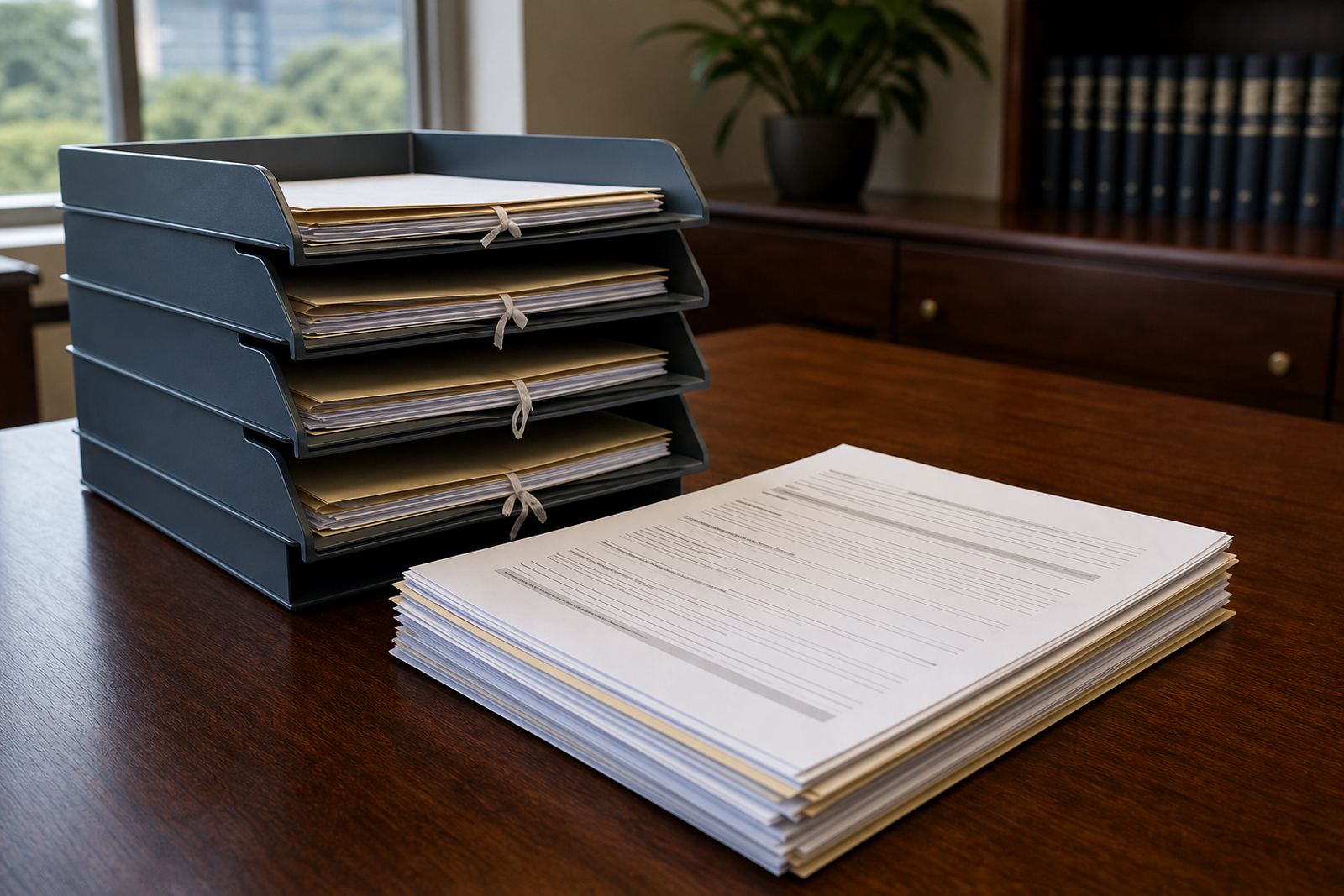
Build the file around the first action, not the biggest bundle
An estates file works better when the opening section holds the items a team reaches for first. That usually means the instruction note, the death notice, the will, identity records and the first round of correspondence. If those pages sit in the same order every time, a paralegal in Sandton or Pretoria does not have to hunt through mixed scans and stray attachments.
For document assembly, this kind of order also helps the team decide which template or checklist belongs where. The file should show the path from instruction to administration, not just a pile of papers with a matter number on top. In practice, that makes handovers cleaner and reduces the small errors that creep in when someone opens the wrong version of a form.
Use a fixed estates sequence that everyone can read
A consistent sequence matters more than fancy naming. Whether the matter is handled in Johannesburg, Cape Town or Bloemfontein, the folder structure should look familiar at a glance. Teams tend to move faster when the same categories appear in the same order on every file.
- Client instruction and intake notes
- Identity documents and contact details
- Death notice, will and appointment papers
- Master of the High Court correspondence
- Asset lists, liabilities and valuations
- Executor and beneficiary communication
- Tax, transfers and final distribution records
That order is practical, not decorative. It supports matter management because each stage can be tied to a known section, and it makes it easier for legal teams to spot what still needs attention. A matter folder that follows one layout every time is far easier to audit too.
Separate evidence, correspondence and working papers
Not every document belongs in the same pile. A scanned bank letter, a beneficiary message, a property valuation and a working note serve different purposes, so they need different homes. If they are mixed together, a reviewer can waste time opening half the file just to confirm one date.
One useful method is to keep three layers: official records, correspondence and internal working papers. Official records include signed forms and issued letters. Correspondence covers messages and notices. Working papers hold calculations, task notes and draft lists that support the file but do not need to sit beside final records. This separation also helps with POPIA minded handling, because sensitive information can be limited to the people who actually need it.
- Keep final documents in one marked section
- Move message chains into their own queue
- Store draft notes away from signed records
- Tag each item with the matter reference
Name files so the matter can be found without guessing
File names should tell the reader what the item is, which matter it belongs to and roughly where it sits in the process. A long label full of vague words makes sorting harder, especially when several estates are open at once. Short and specific names work better on shared drives and in searchable review queues.
For example, a clear label might show the matter reference, the document type and the date. That gives the team a predictable way to sort files and reduces duplicate uploads. It also helps when people work remotely or across offices, because the file itself carries useful detail even before it is opened. In a busy week, that small discipline saves a lot of backtracking.
Map deadlines to the folder, not to memory
Estate administration comes with steps that need tracking, and some depend on outside responses. If those dates live only in a person’s head or in a sticky note, the file can drift. A matter pipeline gives the team a better grip on what is due, what is waiting and what still needs a document attached.
Practical deadline markers can sit next to the relevant section of the file. For example, the team can link a task to the Master filing, a follow up on asset details, or a distribution sign off. When the folder shows the next action clearly, nobody has to reopen old threads just to find the latest instruction. That is useful on estates that run over months, especially when several people touch the same matter.
- Link tasks to specific sections
- Record the date a document was received
- Flag items still waiting on outside papers
- Keep a visible trail of completed steps
A Sandton example: one estate, many hands
Take a mid-sized estate matter handled from Sandton with documents coming from a family in Johannesburg and a property transfer team in Cape Town. The file will move through intake, verification, correspondence and finalisation, often with more than one person editing it. If the folder structure is loose, the team spends time chasing versions instead of moving the matter forward.
A cleaner setup lets the operations lead, the template specialist and the onboarding team work from the same order. The evidence imports sit in one section, the signed letters in another and the task queue stays searchable by matter name. When the folder is arranged that way, the file feels calmer to manage and easier to audit later. It also means less pressure on shared drives, which is where many estate files become messy in the first place.